Resume metadata is not the reason you get hired, but messy metadata can make a polished resume look careless when it is stored, searched, or forwarded.
Key takeaway
Quick answer
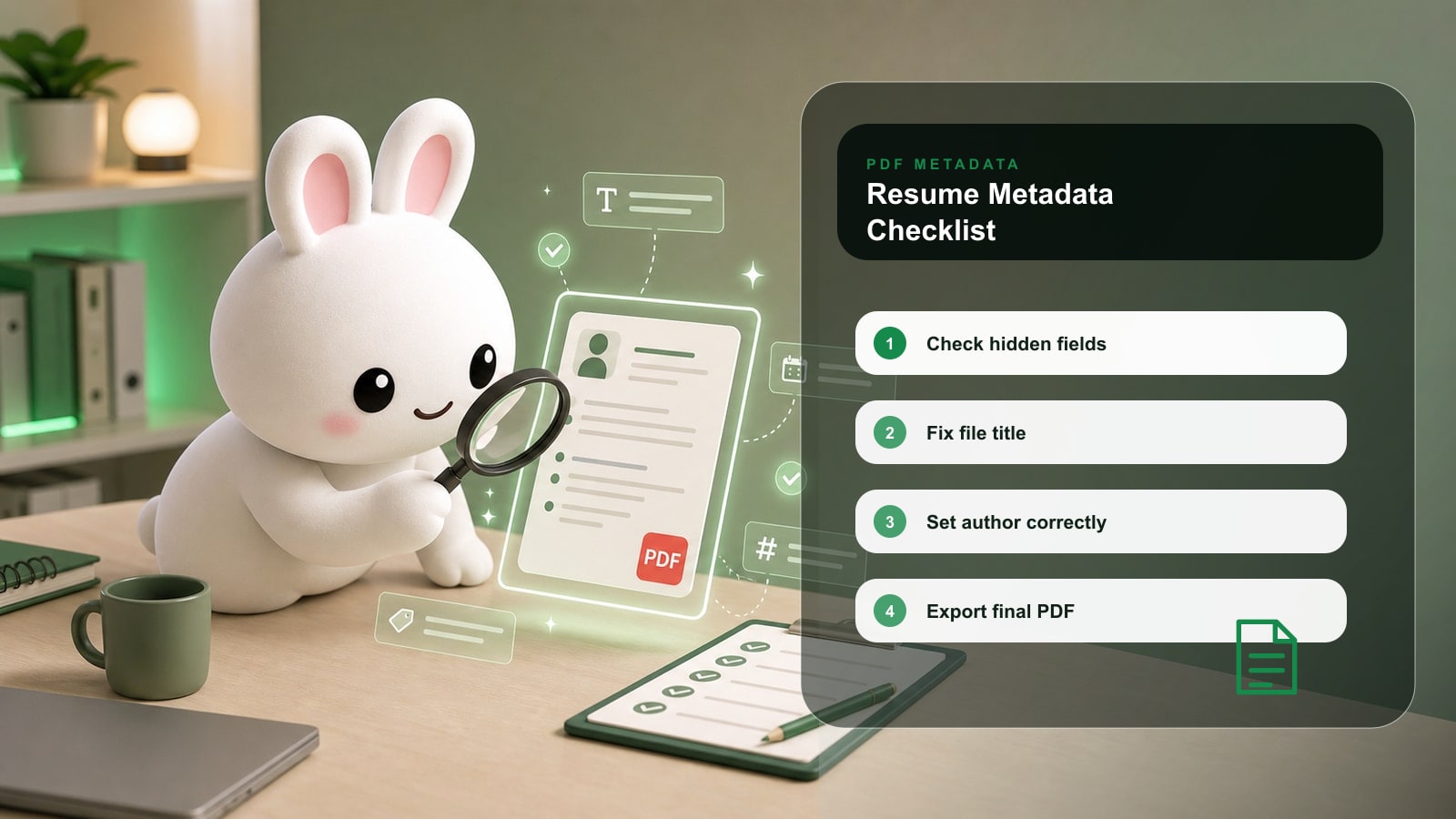
Check the PDF title, author, subject, keywords, file name, and language before applying.
Remove template creator names, old employers, or unrelated author fields.
Use metadata to describe the file clearly, not to stuff keywords.
Fix metadata after the visible resume is final, then export the final PDF.
Search intent: what this page helps you do
This checklist is for candidates who already have a visible resume and want the hidden PDF file information to match the same professional standard.
The practical goal is not to make a resume or job-search document sound polished. The goal is to make the next reviewer understand your fit faster, with fewer assumptions and less friction.
Resume metadata fields to review
Most candidates only inspect the visible page. The metadata below can travel with the PDF and affect how the file appears in previews, storage systems, and search.
| Area | What strong candidates do | What to avoid |
|---|---|---|
| Title | Use a clear title such as Jane Doe - Data Analyst Resume. | Leaving a blank or template-generated title. |
| Author | Use your real name or professional name. | Keeping Microsoft Word, Canva, or another person as the author. |
| Subject | Describe the target role or resume purpose briefly. | Adding a long paragraph or unrelated content. |
| Keywords | Use a short set of truthful role terms. | Repeating keywords unnaturally. |
| Filename | Use name plus target role. | resume-final-v9-new.pdf. |
Step-by-step workflow
- 1Finalize the visible resume first.
- 2Open the PDF properties or use a metadata checker.
- 3Set title, author, subject, and language.
- 4Add a small set of truthful role keywords.
- 5Remove old template, school, employer, or creator leftovers.
- 6Export and upload only the final file.
Before and after examples
| Weak version | Stronger version |
|---|---|
| Title: Untitled document. | Title: Priya Raman - Investment Banking Analyst Resume. |
| Author: Canva Template 2024. | Author: Priya Raman. |
| Keywords: hard worker, leadership, passionate, job. | Keywords: Investment Banking, Valuation, DCF, M&A, Excel. |
Use the stronger versions as patterns, not scripts. Replace the details with your real scope, tools, audience, numbers, and constraints.
Checklist before you use this advice
Key takeaway
Application checklist
The metadata title matches the target resume file.
The author field is your name.
The filename is professional and specific.
No hidden field references an old employer, template, or unrelated project.
Keywords are focused and truthful.
Common mistakes
| Mistake | Why it hurts | Better move |
|---|---|---|
| Treating metadata like SEO stuffing. | It can look spammy and unprofessional. | Use short, accurate descriptors. |
| Fixing metadata before edits are final. | The export may overwrite your fixes. | Run metadata cleanup last. |
| Ignoring filenames. | Recruiters see the filename before they open the resume. | Use a clear name-role format. |
How Rezoomed helps
Rezoomed Metadata Enhancer audits hidden PDF fields and helps you export a cleaner recruiter-ready file after the visible resume is finished.
Use the relevant Rezoomed tool after you have a clear target role, not before. The tool is most useful when it has a real job description, a real resume, and a concrete outcome to improve.
Fast answers to common questions
Frequently asked questions
- 01+
Does resume metadata affect ATS ranking?
It is not a magic ranking factor. It is a file-quality and context signal that helps keep the document professional and searchable.
- 02+
What keywords should I put in resume metadata?
Use the target role, core skills, tools, and industry terms that honestly match your experience.
- 03+
Should I include my full address in metadata?
No. Keep personal information minimal. City, state, email, phone, and professional links belong in the visible resume when relevant.
Final takeaway
The strongest applications are specific, readable, and easy to verify. Use this guide to remove uncertainty: show the role you want, prove the work you have done, and keep every claim defensible in an interview.
Sources and further reading
Related Rezoomed tools
- Resume Metadata Enhancer - Audit hidden PDF metadata fields and export a cleaner recruiter-ready file.
- ATS Checker - Check structure, keywords, and readability before sending the updated PDF.